Govt Announces Rs. 46.56 Billion Electricity Relief 2026 – Full Tariff Reduction Details
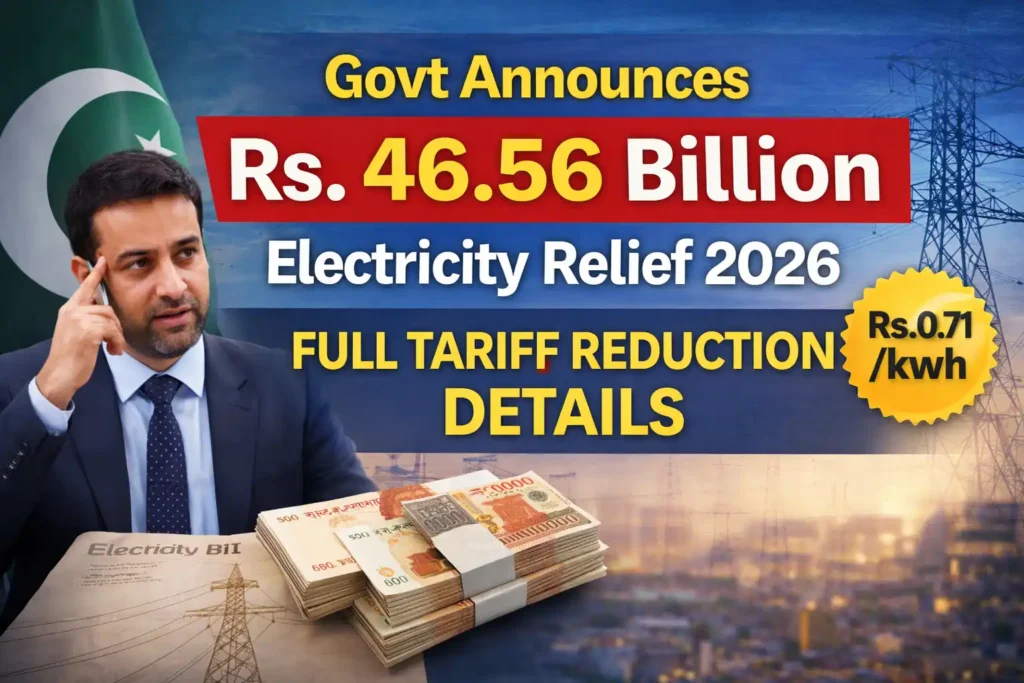
The Government of Pakistan has announced a major relief package for electricity consumers across the country. According to official data, a total relief of Rs. 46.56 billion has been provided during the first eight months of FY 2025–26.
This article explains everything in easy English, including electricity price reduction, industrial benefits, reasons behind tariff changes, and what it means for common people.
Overview of Electricity Relief 2026
The government claims that electricity consumers have received significant financial relief.
Key Highlights:
- Total relief: Rs. 46.56 billion
- Tariff reduction: Rs. 0.71 per unit (kWh)
- Additional relief (Jan–Feb 2026): Rs. 26.85 billion
This relief aims to reduce the burden of rising electricity costs.

What is Electricity Tariff?
Electricity tariff is the price per unit of electricity that consumers pay.
Simple Example:
- If tariff = Rs. 50/unit
- You use 100 units
- Your bill = Rs. 5,000
Even a small reduction in tariff can save money.

Industrial Consumers Get Major Benefit
The biggest benefit of this relief has gone to industries.
Price Change:
- March 2024: Rs. 49.19 per unit
- March 2026: Rs. 34.75 per unit
Total Reduction:
- Rs. 14.44 per unit
This is a huge decrease that helps businesses reduce costs.

Why is Relief Important for Industry?
Industries use large amounts of electricity.
Benefits:
- Lower production cost
- Increased exports
- More job opportunities
- Better economic growth

Relief for Domestic Consumers
Although industries benefited the most, domestic users also received relief.
Impact:
- Slight reduction in electricity bills
- Lower financial pressure
- Improved affordability
Reasons Behind Electricity Price Changes
Electricity prices depend on several factors:
1. Fuel Prices
Higher fuel prices increase electricity cost.
2. Exchange Rate
A weak currency makes imports expensive.
3. Demand and Supply
High demand increases cost.
4. Power Plant Issues
Shutdowns like the K-3 plant outage affect supply.
January–February 2026 Adjustments
During Jan–Feb 2026:
- Fuel charges increased temporarily
- Electricity demand was higher
- Supply disruptions occurred
Despite this, the government claims:
👉 Net relief of Rs. 26.85 billion
Government Strategy for Price Control
The Government of Pakistan is using different strategies:
- Monitoring global fuel prices
- Managing exchange rate impact
- Adjusting tariffs carefully
- Coordinating with stakeholders
Challenges in Electricity Sector
Despite relief, challenges still exist:
⚠️ High Fuel Costs
Global oil prices are unstable.
⚠️ Power Shortages
Load shedding in some areas.
⚠️ Circular Debt
Financial issues in power sector.
Public Reaction to Electricity Relief
People have mixed opinions:
👍 Positive Views:
- Some relief in bills
- Industrial growth
👎 Negative Views:
- Bills still high
- Relief not enough
Is This Relief Enough?
Many experts believe:
- Relief is helpful but limited
- Long-term solutions are needed
- Energy reforms are required
Future of Electricity Prices in Pakistan
Electricity prices may depend on:
- Global fuel trends
- Government policies
- Renewable energy projects
Role of Renewable Energy
Pakistan is focusing on:
- Solar energy
- Wind power
- Hydropower
This can reduce electricity cost in future.
Impact on Economy
Electricity pricing affects the economy:
📊 Lower Prices:
- Boost industries
- Increase exports
- Create jobs
📉 Higher Prices:
- Increase inflation
- Reduce purchasing power
Tips for Consumers to Save Electricity
✔ Use energy-efficient appliances
✔ Turn off unnecessary lights
✔ Avoid peak hours usage
✔ Install solar panels
Popular Google Search Keywords (Included)
- electricity relief Pakistan 2026
- electricity tariff reduction Pakistan
- power bill relief Pakistan
- electricity prices Pakistan today
- industrial electricity rates Pakistan
- energy crisis Pakistan
- electricity bill reduction
Conclusion
The Government of Pakistan has announced a Rs. 46.56 billion electricity relief package, which has reduced tariffs and supported industries.
However, while this relief is helpful, many challenges remain. Consumers are still facing high electricity bills, and long-term solutions are needed to stabilize prices.
The future of electricity in Pakistan depends on smart policies, renewable energy, and better management of resources.