
Challenger Explosion Explained: What Really Happened in the NASA Disaster?
The Challenger explosion explained topic is one of the most searched and discussed events in space history. The NASA Challenger disaster shocked the entire world when the Space Shuttle Challenger broke apart just moments after launch.
This tragic event happened in 1986 and changed how space missions are planned and executed. People still ask today: what caused Challenger explosion and could it have been prevented?
In this article, you will understand the full story in simple words, including the cause, timeline, investigation, and lessons learned.
What Was the Challenger Mission?
The Challenger was part of NASA’s Space Shuttle program. It was designed to carry astronauts into space for research and exploration.
On January 28, 1986, the shuttle launched with seven crew members onboard. One of them was a school teacher, which made the mission very special and widely followed.
The launch was shown live on television, which meant millions of people saw what happened next.

The Space Shuttle Challenger disaster
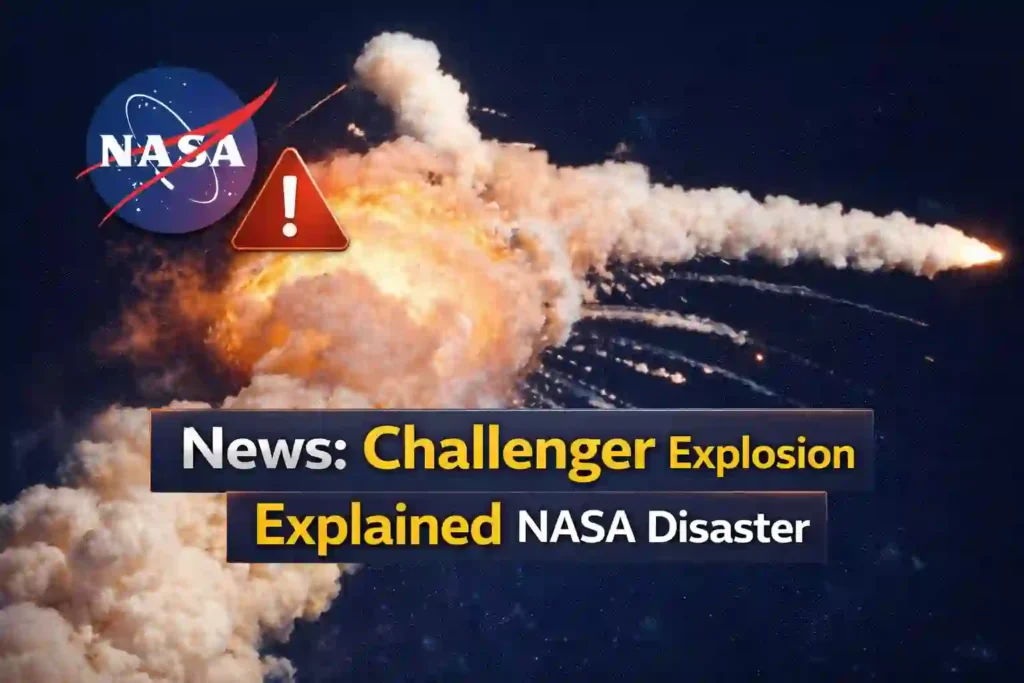
The tragedy occurred just 73 seconds after liftoff. The shuttle broke apart in the sky, creating a large cloud of smoke.
It is important to understand that the shuttle did not explode like a bomb. Instead, it failed due to a serious technical problem that caused the structure to break.
Sadly, all seven astronauts lost their lives. This made it one of the most heartbreaking events in space exploration history.

What Caused the Challenger Explosion?
The main answer to what caused Challenger explosion lies in a small component called the O-ring.
O-Ring Failure
The shuttle used solid rocket boosters that had rubber seals known as O-rings. These seals were meant to prevent hot gases from escaping.
However:
- The weather was extremely cold on launch day
- The O-rings became hard and less flexible
- They failed to seal properly
- Hot gases leaked out and damaged the external fuel tank
This led to the breakup of the shuttle.
Even though it was a small part, its failure caused a major disaster.

Why Weather Was a Big Factor
Weather conditions played a key role in the Challenger explosion explained case.
On the morning of the launch, temperatures were close to freezing. Engineers had already warned that cold weather could affect the O-rings.
Despite these concerns, the launch went ahead.
This decision later became one of the biggest points of criticism in the investigation.

Timeline of the Disaster
Here is a simple breakdown of the NASA Challenger disaster timeline:
- 0 seconds: Shuttle launches successfully
- 30–40 seconds: Early signs of trouble begin
- 58 seconds: Flame appears near the booster
- 73 seconds: Shuttle breaks apart
The entire event happened very quickly, leaving no chance for recovery.
Investigation and Findings
After the accident, a special investigation team was created to find the cause.
The investigation revealed:
- O-ring failure was the main issue
- Cold weather made the problem worse
- Engineers had raised concerns before launch
- Communication gaps existed within NASA
This showed that the NASA 1986 disaster was not just technical, but also related to decision-making.
Impact on NASA
The space shuttle Challenger accident had a major impact on NASA and future missions.
Shuttle Program Halt
NASA stopped all shuttle launches for nearly three years to review safety.
Design Improvements
Changes were made to the booster design to prevent O-ring failure.
Better Safety Rules
NASA introduced stricter safety checks and procedures.
Improved Communication
Decision-making processes were improved to ensure engineers’ concerns are heard.
Lessons Learned
The Challenger explosion explained story teaches important lessons:
- Small problems can lead to big disasters
- Safety should always come first
- Weather conditions must be taken seriously
- Engineers’ warnings should never be ignored
These lessons are still followed in modern space missions.
Legacy of the Challenger Crew
The seven astronauts who died in the NASA Challenger disaster are remembered for their courage and dedication.
Their sacrifice led to major improvements in space safety and inspired future generations to pursue science and exploration.
Conclusion – Challenger Explosion Explained: What Really Happened in the NASA Disaster?
The Challenger explosion explained case remains a powerful reminder of the risks involved in space travel. The NASA Challenger disaster happened due to a combination of technical failure and human decisions.
Understanding what caused Challenger explosion helps ensure such tragedies are not repeated. Today, space agencies follow strict safety standards because of the lessons learned from this event.
This disaster changed space exploration forever and continues to guide how missions are planned and executed.