
Fuel Prices Pakistan Today – Petrol & Diesel Complete List
Fuel prices in Pakistan are a major concern for millions of citizens, businesses, and industries. Whether you are a daily commuter, transport owner, or running a business, staying updated with the latest petrol price in Pakistan today and diesel rate updates is essential. In April 2026, fuel prices continue to fluctuate due to global oil trends, currency exchange rates, and government policies.
In this detailed guide, you will find the latest petrol and diesel prices in Pakistan, reasons behind price changes, expected future trends, and complete FAQs to help you understand everything in one place.
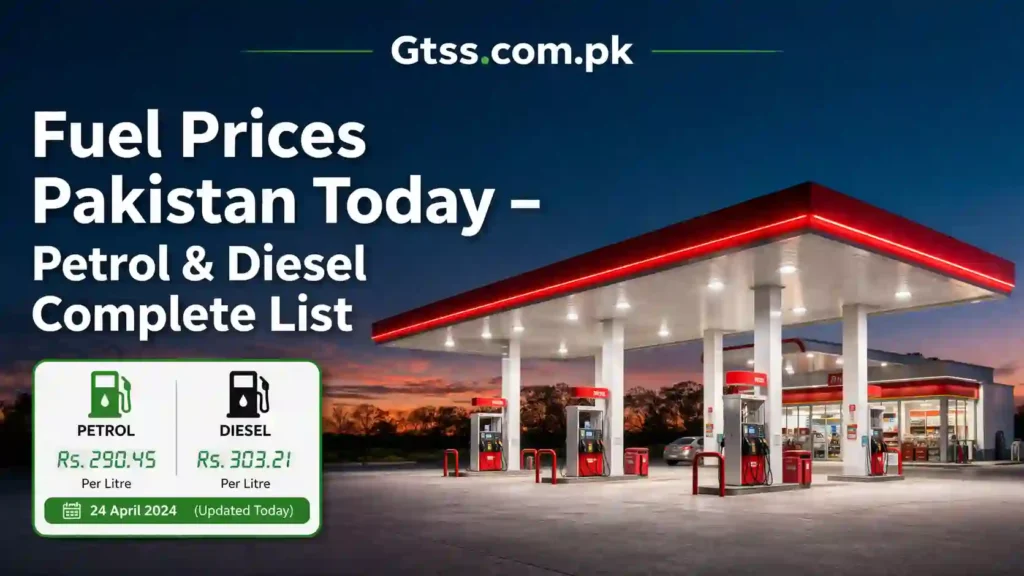
Latest Fuel Prices in Pakistan Today (April 2026)
Here is the updated petrol and diesel price in Pakistan today:
- Petrol (MS): Rs. 321.17 per litre
- High-Speed Diesel (HSD): Rs. 335.86 per litre
These prices are officially revised and implemented across the country. The government usually updates fuel prices every 15 days based on international market conditions.

Petrol Price in Pakistan Today – Complete Overview
Petrol, also known as Motor Spirit (MS), is the most commonly used fuel in Pakistan. It is mainly used in:
- Motorcycles
- Cars
- Rickshaws
- Small transport vehicles
The petrol price in Pakistan today Rs. 321.17 is considered relatively high compared to previous years. This increase directly affects daily commuters and middle-class households.
Why Petrol Prices Are Increasing
Several key factors influence petrol prices in Pakistan:
- International Oil Prices
Pakistan imports a large portion of its fuel. When global crude oil prices increase, local prices also rise. - Dollar Rate in Pakistan
Since oil is traded in US dollars, any increase in the USD to PKR exchange rate raises fuel costs. - Government Taxes and Levies
Petroleum Development Levy (PDL) and other taxes significantly impact the final petrol price. - Refinery and Distribution Costs
Costs related to refining and transportation also play a role.

Diesel Price in Pakistan Today – Full Details
High-Speed Diesel (HSD) is widely used in:
- Trucks and buses
- Agricultural machinery
- Heavy transport vehicles
- Generators
The diesel price in Pakistan today Rs. 335.86 per litre is higher than petrol, which directly impacts:
- Transportation costs
- Food prices
- Construction expenses
Impact of Diesel Price Increase
When diesel prices rise, it affects the entire economy:
- Goods transportation becomes expensive
- Inflation increases
- Daily commodities become costly
- Farmers face higher production costs

Fuel Price History in Pakistan (Recent Trends)
Over the past few years, fuel prices in Pakistan have shown a strong upward trend. Key observations include:
- Continuous increase due to global oil crisis
- Frequent price revisions every 15 days
- Dependency on imports
- Economic pressure on the government
In 2026, prices remain volatile, making it important for users to stay updated regularly.

Factors Affecting Fuel Prices in Pakistan
Understanding the fuel pricing mechanism in Pakistan helps explain why prices change so often.
1. Global Crude Oil Market
Pakistan imports crude oil from international markets. Any geopolitical tension or supply disruption can increase prices.
2. Exchange Rate (USD to PKR)
A weaker Pakistani Rupee increases the cost of imported oil.
3. Government Policies
Subsidies, taxes, and levies directly affect the final price charged to consumers.
4. Demand and Supply
Higher demand during seasons like winter or harvest periods can increase prices.
Expected Fuel Price Trend in Pakistan 2026
Experts predict that fuel prices in Pakistan may continue to fluctuate due to:
- Global economic uncertainty
- Oil production decisions by major countries
- Currency instability
However, there are chances of temporary relief if:
- International oil prices decrease
- Pakistani Rupee strengthens
- Government reduces taxes
How Fuel Prices Affect Daily Life in Pakistan
Fuel prices have a direct and indirect impact on every citizen:
Transportation Costs
Higher petrol and diesel prices increase fares for buses, taxis, and ride services.
Inflation
Goods become expensive due to higher transportation costs.
Electricity Costs
Diesel-based generators increase electricity expenses.
Business Expenses
Industries face higher operational costs.
Tips to Save Fuel in Pakistan
With increasing fuel prices, saving fuel has become essential. Here are practical tips:
- Maintain proper tyre pressure
- Avoid unnecessary acceleration
- Use carpooling
- Regular vehicle maintenance
- Avoid traffic-heavy routes
These small steps can help reduce your monthly fuel expenses.
Government Role in Fuel Price Control
The Government of Pakistan reviews fuel prices every 15 days based on recommendations from relevant authorities. Their role includes:
- Setting petroleum levy
- Managing subsidies
- Monitoring oil companies
- Ensuring supply across the country
Despite efforts, complete control over prices is difficult due to global dependency.
Future of Fuel Prices in Pakistan
Looking ahead, Pakistan may explore:
- Renewable energy sources
- Electric vehicles (EVs)
- Reduced dependency on imported fuel
This could help stabilize fuel prices in the long term.
FAQs – Fuel Prices Pakistan Today
What is the petrol price in Pakistan today?
The petrol price in Pakistan today is Rs. 321.17 per litre.
What is the diesel price in Pakistan today?
The high-speed diesel (HSD) price is Rs. 335.86 per litre.
Why are fuel prices increasing in Pakistan?
Fuel prices are increasing due to global oil rates, dollar exchange rate, and government taxes.
How often do fuel prices change in Pakistan?
Fuel prices are usually updated every 15 days.
Which fuel is more expensive in Pakistan?
Currently, diesel is more expensive than petrol in Pakistan.
How can I save fuel in daily use?
You can save fuel by maintaining your vehicle, driving smoothly, and avoiding unnecessary trips.
Fuel Prices Pakistan Conclusion
The fuel prices in Pakistan today show that petrol and diesel rates remain high, affecting every sector of the economy. With petrol at Rs. 321.17 and diesel at Rs. 335.86, managing fuel consumption has become more important than ever.
Staying updated with daily fuel prices helps individuals and businesses plan better. As global and local factors continue to influence pricing, keeping an eye on updates is essential for financial stability.